
Composite Outcomes: Simple vs Hierarchical
Part 1: Moving Beyond the "Simple" Composite in Clinical Trials
HEALTHCARERESEARCHEDUCATION
Martin Krsak
1/29/20261 min read
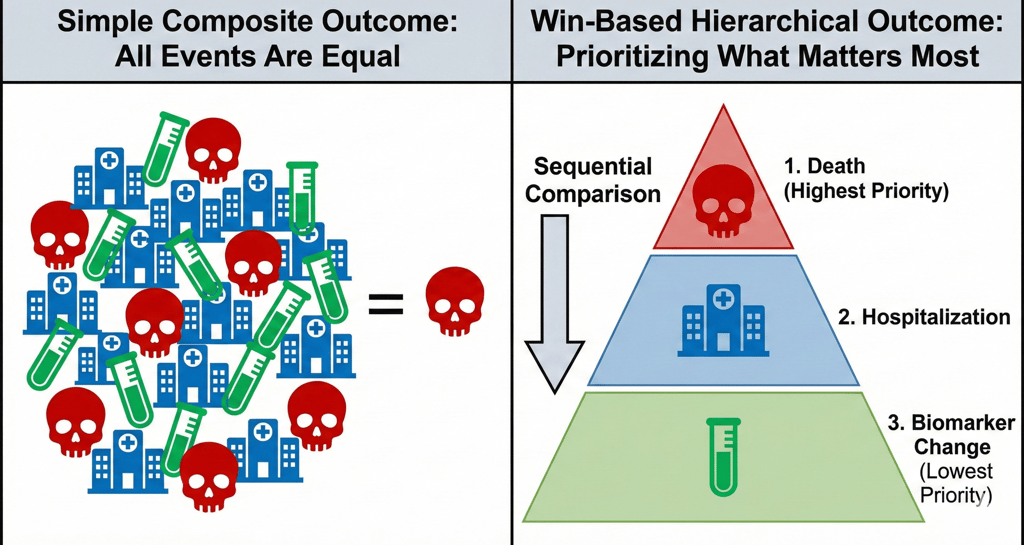
How do you combine death, hospitalization, and a biomarker into a single, meaningful endpoint?
For years, the standard has been a simple composite outcome. It's a binary "yes/no" – did the patient experience any of the events? The problem? It treats a hospitalization the same as death. This can obscure the true clinical picture, especially if a treatment reduces less severe events but has no impact on mortality.
Enter win-based hierarchical composite outcomes (like the win ratio). This approach is a game-changer. It doesn't just count events; it prioritizes them based on clinical importance.
Hierarchy is Key: The analysis first compares patients on the most severe outcome (e.g., death). If there's a "winner," the comparison stops.
Sequential Analysis: Only if patients are "tied" on death does it move to the next outcome (e.g., hospitalization), and so on.
This ensures that the final result is driven by the most clinically relevant events, providing a more accurate and nuanced view of a treatment's benefit.
Consulting
Expertise in clinical & research management services:
+1-303-564-5110
© 2025. All rights reserved.